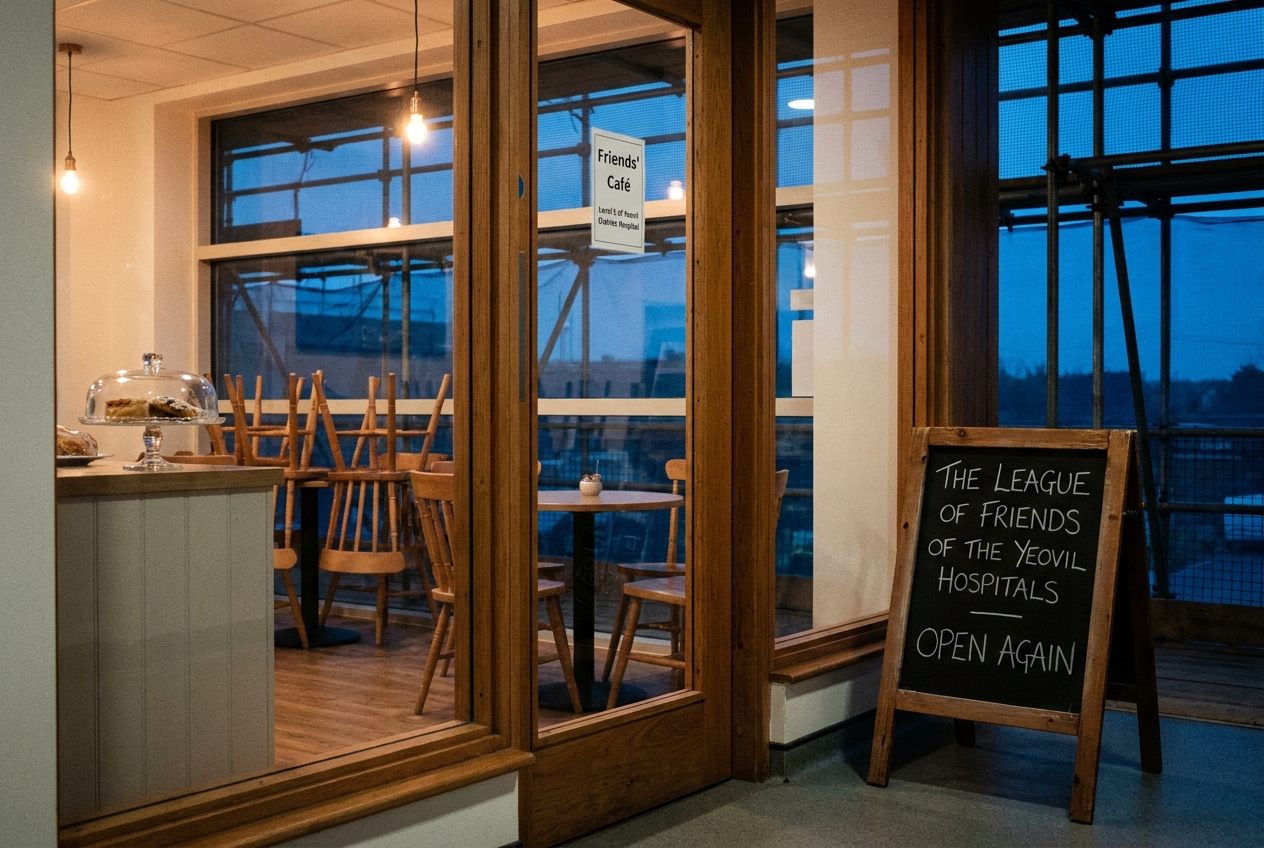
The roof of the Friends’ Café has been a subject of trustees’ meetings since at least 2021. The original 2003 build-out had stood up remarkably well for two decades, and the kitchen below it had only one bad year — the spring of 2018, when a slow leak in the south-west corner saw a tarpaulin in the ceiling void for the better part of three months. By the autumn of 2024 the trust’s estates team had it on the capital programme for the following year, and by the autumn of 2025 the project had moved up the list to first quarter of 2026. We were told in late November to expect a fortnight’s closure.
It is hard to overstate what nine days of café closure means to this charity. The Friends’ Café is our largest single source of income — £312,000 to the wards last year — and almost every member of our regular volunteer rota turns up for at least one shift a week. It is also, for many of the staff and the families on Level 2, the place where the day gets fixed. The closure was always going to be felt.
We met with the kitchen manager, Helen Marsh, in mid-December and agreed a plan. The kitchen would take its annual stocktake in the closure period. Three of the kitchen team would work from the Friends’ office at Stoke-Sub-Hamdon, baking the cakes and pastries that the café would sell on its first three days back open, and stocking the trolley with a slightly enriched float for the closure period — the patients on the wards would not be without a paper or a Twirl while the café was dark. Our shop on the concourse would carry an extended range of sandwiches from the wholesaler, and we agreed with the trust that the canteen on Level 1 would take any overflow from the café’s usual lunchtime regulars.
Nine days
The café closed on the evening of Friday 7 February with a small farewell tea for the regulars. The trust’s estates team and their contractors were on site from 06.30 the next morning. By Tuesday 11 February the old roof was off and the air-handling was being lifted in. By Friday 14 February the new ceiling tiles were going up. The estates director who has overseen most of our café-roof conversations across five years walked the site twice a day. The contractors were courteous, quiet, and out of the building by 18.00 every evening — none of the night shifts that we had been bracing the wards for.
The shop took an unexpected step up in trading. Sandwich sales, normally around forty units a day, went over a hundred on the Wednesday and Thursday of the closure. The trolley round volunteers worked a slightly enriched float — the kitchen team had baked five trays of millionaire’s shortbread the previous week, and at 14.30 every afternoon the trolley returned to the office for the next batch. We are grateful to Helen and her team for the baking, and to Tracey at the shop for the steady, almost cheerful, handling of double the usual lunchtime queue.
The kitchen team baked through the closure and the trolley round ran a quietly enriched float. The café was dark; the work was not. Annette Parker · Volunteer Coordinator, in her closure-week log
The reopening
The café reopened at 09.00 on Monday 17 February. We had not advertised the date publicly — there was no point, as the regulars come every day and would simply find the place open or closed. A small queue formed at 08.45 anyway. The chair was the first customer. He ordered a coffee and a fruit scone and paid in cash.
Sales in the first week back ran at 88% of the pre-closure baseline. By the second week we were at 102%. Helen tells me she did not lose a single regular. Two of the long-stay families on Level 3 came down on the reopening morning to thank the kitchen team for the takeaway bags they had been left during the closure. We did not advertise that either.
The new lighting is a little brighter than the old. The air-handling, which has been the subject of much trustees’ complaint over the years, is a great deal quieter. The chocolate cake recipe is unchanged.
The cost to us
The trust paid for the roof, the lighting and the air-handling — they are the freeholders, and it is their building. We paid only for the temporary signage, the off-site baking expenses, and a small dinner for the contractors at the end of week two. The total cost to the charity was £1,840, and the closure cost us approximately £14,200 in lost trading. We expect to make up the latter by the end of the financial year.
The whole episode is — quietly — a credit to the partnership between the Friends and the trust. The estates team gave us the dates we needed; we gave them the goodwill of the volunteers; the kitchen team kept the patients in cake. It is the small, low-drama way that two organisations work together when they have done it for fifty-eight years.
What is next
The café is open every day this Monday through Sunday, 09.00 to 16.30, as it has been since 2003. The chocolate cake is back. The scones are baking by 09.30. The chair will be there at some point this week. So, no doubt, will the rest of you.